

Where Canadian Agriculture Changed Forever
Discover the Roots of Prairie Agriculture
Discover the "Wheat King" who shaped the West.
When you visit Seager Wheeler Farm, you aren't just looking at old buildings—you are walking the exact grounds where Canadian agricultural history was rewritten. For anyone looking to connect with their local heritage, understand the pioneer spirit, or inspire the next generation with a story of pure perseverance, this is where it all began.

The Man: From English Immigrant to the "Wheat King"
A story of grit, curiosity, and prairie perseverance.
It’s hard to imagine arriving in a harsh, unfamiliar landscape as a teenager and changing the world, but that is exactly what Dr. Seager Wheeler did.
Born on the Isle of Wight in England in 1868, Seager emigrated to Canada at just 17 years old. By 1897, he was breaking land by hand to build a homestead near Rosthern, Saskatchewan, living in a humble dirt "soddy" with his mother.
Seager had no formal agricultural training. What he did have was an incredible curiosity and a relentless work ethic. Through trial, error, and meticulous observation of his gardens and orchards, he taught himself the vital principles of dryland farming and figuring out how to coax life and abundance out of the challenging prairie soil.

The Breakthrough That Changed Everything
Early prairie farmers faced a massive, devastating problem: the Canadian growing season was incredibly short, and early frosts regularly wiped out entire crops before they could be harvested.
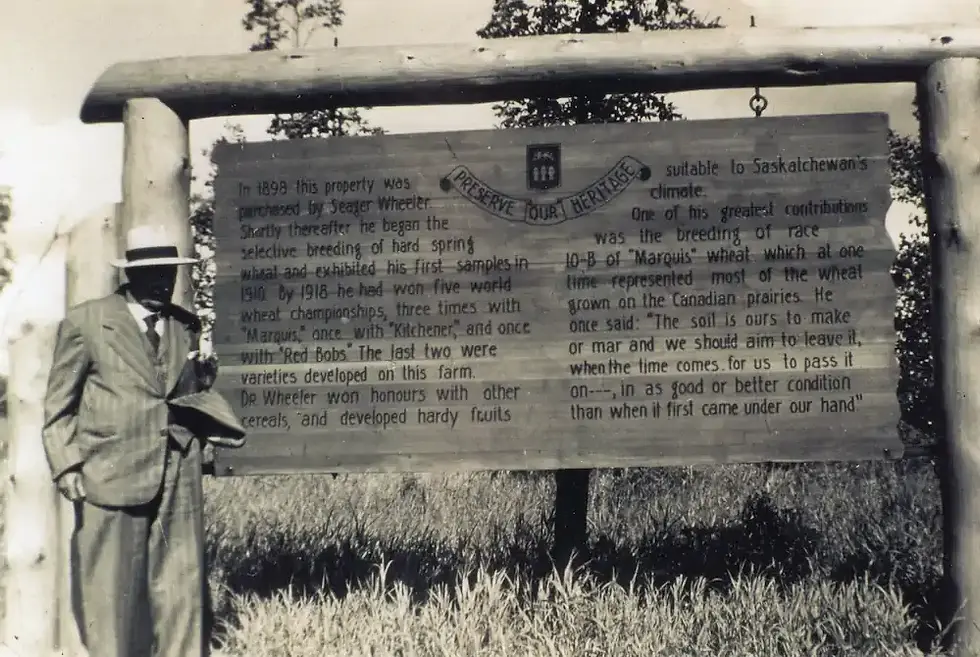
Seager dedicated himself to finding a solution. He meticulously selected and developed a hardy, fast-maturing strain called Marquis 10B Wheat, perfectly adapted to survive and thrive within the region's brief 100-day growing season.


Five-Time World Champion
His agricultural innovations didn't just save local farms; they captured the attention of the globe. Because of his groundbreaking work with Marquis 10B and other grain varieties, Seager Wheeler was crowned the World Wheat Champion five times between 1911 and 1918.
His dedication officially earned him the legendary title: The Wheat King of the Prairies.
The Homestead: A Living Legacy
Preserving a pivotal piece of Canadian history for your family to explore.
Beyond his global achievements, Seager was a devoted family man. He married Lily Martin in 1908, and together they raised four daughters on the farm. In 1925, they built the beautiful, iconic family home that still stands on the property today, which remained in the family until the mid-1970s.

Becoming a National Historic Site
Because of its massive impact on the development of Western Canada, Seager Wheeler Farm was officially designated a National Historic Site, opening its doors to the public in 1996.
Over the years, passionate volunteers and historians have lovingly restored the farm buildings, the 1925 home, the sweeping yards, and the heritage orchards. When you walk the paths today, you are experiencing the Wheeler family's pioneer lifestyle exactly as it was.
Step Into the Archives
Get an up-close look at the documents and awards that made history.
History is best experienced when you can see the proof with your own eyes. As you tour the farm, you will have the chance to view incredible archival highlights from Seager Wheeler’s life, including:
-
The Championship Hardware: See the prestigious awards and recognition bestowed upon a humble Saskatchewan farmer by the global agricultural community.
-
Historic Documents: View original letters, records, and photographs that document the day-to-day realities of pioneer farming.
-
The Tools of the Trade: Get an up-close look at the seed cleaning plant and the vintage equipment that helped revolutionize an industry.
-
Visit Wheeler's archives online for more pictures and documents.


